
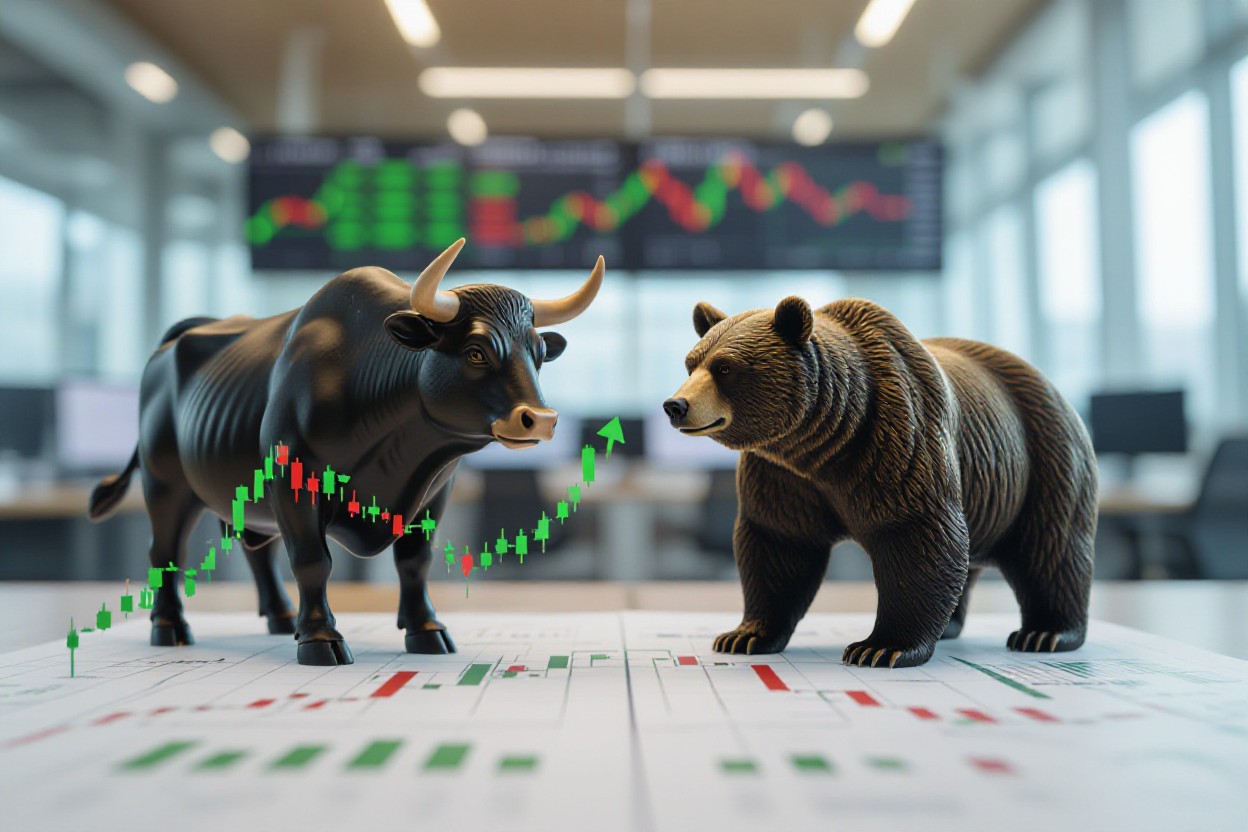
Bull markets matter to you because that’s when it feels like your money practically grows itself, but if you don’t understand what a bull vs. bear market really means, you can get caught on the wrong side of big price swings. You’re not just watching charts here – you’re deciding how much risk to take, when to stay invested, and when to protect what you’ve already built.
So in this post you’ll see how different market moods can shape your plan, affect your timeline, and even your stress levels… because your strategy has to shift when the market does.
Key Takeaways:
- Biggest surprise? You don’t actually need to predict bull vs. bear markets to do well – you just need a strategy that survives both without you panicking or trying to time every twist and turn.
- In bull markets, your main job isn’t finding the hottest stock, it’s stopping yourself from getting greedy, overleveraged, or blowing up your risk just because everything’s going up and feels easy.
- During bear markets, your portfolio “wins” less by picking heroes and more by avoiding disasters – solid diversification, boring cash buffers, and realistic loss limits suddenly become your best friends.
- The same asset allocation shouldn’t stay frozen forever – your mix of stocks, bonds, and cash can flex a bit with market cycles, as long as those tweaks fit your long-term plan, not your latest mood swing.
- Automatic habits like dollar-cost averaging and rebalancing quietly force you to buy more in bears and trim in bulls, so you’re systematically doing what feels emotionally uncomfortable but financially smart.
- Your time horizon matters way more than the current market label – long-term investors can ride out multiple bulls and bears, while short-term needs should be protected with safer assets and less drama.
- Emotional discipline is basically your hidden asset class – if you can stick to your rules when markets are euphoric or terrifying, your strategy in bull and bear markets suddenly looks a lot more resilient.
What’s a Bull Market Anyway?
Defining Bull Markets
When you hear people bragging that their portfolio is “on fire”, what they usually mean is that they’re riding a bull market. In simple terms, you’re in a bull market when prices are trending up for an extended period, not just for a few weeks, and investors are generally optimistic instead of bracing for impact. Most pros define a bull market in stocks as a rise of about 20% or more from a recent market low, paired with a feeling that the worst is behind you rather than up ahead.
It isn’t only about the numbers on a chart though, it’s also about behavior. In a bull market, you tend to see more money flowing into stocks, more IPOs coming to market, and more people talking confidently about “buying the dip” because they fully expect the uptrend to continue. Your risk-taking goes up when you feel like the market is on your side, which is exactly why understanding what a bull market is – and isn’t – matters for how you invest.
Historical Context and Examples
Some of the best case studies for you sit right in recent history. After the financial crisis, the S&P 500 kicked off a massive bull market starting in March 2009 that ran for about 11 years, delivering more than 400% total return if you stayed invested. That run included scary pullbacks, corrections of 10% to almost 20%, but as long as the broader trend stayed up and earnings kept improving, the bull stayed very much alive.
Another wild example you probably felt personally was the surge after the Covid crash in 2020. From the bottom in late March 2020, the S&P 500 doubled in roughly 17 months, and some tech names did far more than that. If you were buying during that chaos, you basically caught a textbook bull market born out of panic selling and rescued by massive stimulus, fast policy moves and, eventually, recovering earnings.
Across these different periods, the pattern is pretty consistent: a harsh drop shakes everyone out, then as the economy stabilizes and earnings expectations improve, buyers slowly return, then aggressively pile in. Your biggest takeaway is that bull markets often start when the news still sounds awful, not when headlines finally turn rosy, which is why relying only on news sentiment can quietly push you to buy late and sell early.
Key Characteristics That Make It a Bull
Instead of guessing based on vibes, you can spot a bull market by watching a few concrete signs. Prices tend to make a series of higher highs and higher lows, major indexes trade above their 200-day moving averages most of the time, and corporate earnings are generally trending upward. You also see credit markets behaving calmly, volatility (think VIX) staying relatively low compared to panic levels, and investors talking more about “opportunities” than “survival”.
On top of that, bull markets usually bring broader participation: small caps start to catch up, cyclicals like financials and industrials wake up, and sectors tied to growth expectations often outperform sleepy defensive names. That kind of market usually rewards you for staying invested, adding regularly, and letting compounding do the heavy lifting instead of trying to time every wiggle in the chart.
What really matters for you is that these characteristics affect how aggressive or conservative your strategy should be: in a bull, you might lean into equities within your risk limits, ride your winners longer, and avoid panicking over routine pullbacks that are just part of an ongoing uptrend, rather than signals that you should bail out of your long-term plan.
What the Heck is a Bear Market?
Defining Bear Markets
You usually feel a bear market in your gut before you see it on a chart, but the technical definition is actually pretty simple. When a major index like the S&P 500 drops 20% or more from a recent high and sticks around there for a while, you’ve got yourself a bear market. It’s not just a bad week or a nasty headline, it’s a sustained slide where prices keep grinding lower and sentiment turns sour.
In your portfolio, that often shows up as a mix of red days, depressing account checks, and headlines screaming about recession risk. You also tend to see volatility spike, trading volumes jump, and defensive assets like Treasuries or cash look a lot more attractive. A correction is usually a quick punch in the face; a bear market is that long, drawn-out fight where you start wondering if you should just walk away from the ring.
Historical Context and Examples
Some of the most memorable bear markets hit so hard that people still talk about them decades later. The 2000-2002 dot-com bust dragged the S&P 500 down roughly 49%, and the Nasdaq cratered by around 78%, which wiped out a whole generation of speculative tech plays. Then 2007-2009 rolled in, the global financial crisis kicked off, and large-cap US stocks fell about 57% from peak to trough.
More recently, you saw how fast things can unravel with the Covid crash in early 2020. The S&P 500 dropped around 34% in about five weeks, one of the quickest descents into bear territory on record, only to whip back into a new bull market faster than most people could adjust their strategy. That mix of “slow-bleed” bears like 2000-2002 and “cliff-dive” bears like 2020 shows you that the label is the same, but the way you live through each one can feel completely different.
When you line these episodes up side by side, a pattern starts to emerge: valuations get stretched, some shock hits (like housing in 2008 or a pandemic in 2020), leverage or speculation gets exposed, and then confidence evaporates. You don’t just see it in stock prices either – credit markets seize up, IPOs dry out, and mergers suddenly look way less exciting. That bigger backdrop matters for you, because it explains why in some bear markets you might want to lean into quality stocks and ride it out, while in others keeping extra cash, shortening your bond duration, or even hedging becomes a lot more attractive.
Key Characteristics That Make It a Bear
Beyond the 20% drop, a true bear market usually comes with a pretty toxic cocktail of sentiment and fundamentals. You get fear-driven selling, pessimistic earnings outlooks, falling economic indicators like PMI or consumer confidence, and constant talk of layoffs or slowing growth. Analyst upgrades dry up, profit warnings pop up more often, and you start hearing phrases like “risk-off environment” and “flight to safety” way too much.
On your screen, that often means lower highs and lower lows for weeks or months, leadership rotating from growth names into defensive sectors like utilities, healthcare, or consumer staples, and small caps getting hit harder than big, established companies. Liquidity can evaporate in riskier corners of the market, dividend cuts become a real threat, and volatility indexes, like the VIX, spike to levels that make option prices look wild.
When you stitch those characteristics together, you get more than just “stocks are down a lot”, you get a shift in the entire market regime you operate in. Your typical buy-the-dip strategy stops working as cleanly, momentum flips, correlations between risky assets jump, and diversification feels like it’s not doing its job because everything seems to fall at the same time. That’s exactly why spotting those bear-market tells early – the sentiment swing, the sector rotation, the spike in volatility – can help you adjust your position sizing, tighten your risk controls, and protect your future self from panic-driven decisions.
The Key Differences Between Bull and Bear Markets
Economic Indicators: What’s the Difference?
In the last few years you’ve probably seen headlines about inflation spikes, Fed rate hikes, and GDP whiplash, and that stuff actually draws a pretty clean line between bull and bear environments. In a bull market, you usually get rising GDP, low or falling unemployment, and corporate earnings that keep surprising to the upside. Companies beat earnings estimates, analysts keep revising price targets higher, and economic data like retail sales or housing starts tend to trend up month after month.
Flip it around and a bear market usually shows up right alongside slowing growth, earnings revisions down, and unemployment creeping higher. You might see GDP contract for two quarters, ISM manufacturing data drop below 50 (which signals contraction), and more companies issuing profit warnings. When you notice the Fed shifting from cutting or holding rates to aggressively hiking – like in 2022 when the US saw multiple 0.75% hikes in a row – that often coincides with a move from a late-stage bull into a bear-ish setup.
Market Sentiment: How Do They Feel?
On social media and in Reddit trading threads, you can almost taste the difference in mood between bull and bear markets. In a bull phase, investors crowd into risk, IPOs are oversubscribed, and you hear phrases like “to the moon” way more than is healthy. Retail investors pile into stocks, call options volume spikes, and surveys like the AAII Sentiment Survey often show bullish readings above 45%-50% for weeks at a time.
In a bear market, that whole vibe flips to fear, frustration, and sometimes flat-out apathy. You see more put buying, higher demand for safe-haven assets like Treasuries or gold, and volatility indexes such as the VIX frequently stay elevated above 25. Financial news turns gloomy, forecasts get slashed, and you might catch yourself doom-scrolling your portfolio more than you admit. Panic selling and “I’m going to cash until this is over” talk are classic bear-market sentiment tells.
For your own strategy, those emotional swings matter way more than you think, because they tempt you to do the exact wrong thing at the exact wrong time. When everyone is euphoric and your feed is full of overnight-millionaire stories, that’s when you feel pressured to chase already-expensive stocks. And when fear takes over and the narrative is “this time it’s different”, you’re more likely to sell quality assets at depressed prices. If you can recognize that bull markets amplify greed while bear markets magnify fear, you give yourself a better shot at sticking to your plan instead of getting yanked around by the crowd.
Duration: How Long Do They Last?
Recent history really shows how uneven the timing can be – the COVID crash in early 2020 was a bear market that hit in about a month, yet the bull market that followed ran for years before things cooled off. Traditionally, US data since World War II suggests that bull markets tend to last longer and deliver bigger gains: the average bull has run around 4-5 years with cumulative returns over 150%, while bear markets are usually shorter, averaging around 1 year with declines in the 30%-35% range. So you spend a lot more time in bulls than you do in bears, even though bears feel louder.
Still, there’s a ton of variation, which is why you can’t just set a timer and wait it out. The 2000-2002 dot-com bust and the 2007-2009 financial crisis both dragged on for more than a year, while the 2020 bear market technically lasted about 33 days from peak to trough in the S&P 500. Some bulls grind higher slowly, others rip upward like 2013 or 2019. Your portfolio has to be built for the fact that you don’t know if the next downturn is a quick correction or a multi-year slog.
When you connect all this to your own investing behavior, duration affects how you handle cash, risk, and patience. A long-running bull might lull you into thinking gains are automatic, so you overextend, use margin, or drift into speculative corners of the market. A drawn-out bear can do the opposite, wearing you down until you capitulate near the bottom because you feel like “this will never end”. Understanding that bulls usually outlast bears helps you justify staying invested, but it also pushes you to create a plan for liquidity and diversification so you can survive the ugly parts without blowing up your future returns.
My Take on How Market Cycles Actually Work
Market Cycles Explained
Ever wonder why markets don’t just go straight up or straight down, but kind of breathe in and out like they’re alive? That’s basically what a market cycle is: a repeating pattern of expansion, euphoria, slowdown, panic, and recovery. You get a bull leg where prices grind higher for months or years, then a topping phase where gains slow and leadership narrows, a bear phase where prices reset, and finally a bottoming process where the next bull quietly starts while most people still feel sick about stocks.
In practical terms, you can see this in the last 25 years: the dot-com bubble topping in early 2000, a brutal bear into 2002, a new bull into 2007, a financial-crisis crash into 2009, then one of the longest bulls in history up to early 2020, followed by that insane 2020 crash and rocket-ship recovery. Same pattern, different story. Your job isn’t to predict every wiggle, it’s to recognize which part of the cycle you’re in and adjust risk, expectations, and behavior accordingly.
The Role of Investor Psychology
Why do these cycles keep repeating even though everyone “knows better” by now? Because markets are basically a giant amplifier of human emotions: fear, greed, FOMO, regret. When prices are ripping higher, you feel like you’re missing out, you anchor to recent gains, and suddenly things that would’ve looked expensive a year ago feel totally “safe” at 30 times earnings. When prices are tanking, the same brain that loved risk last year starts obsessing over worst-case scenarios.
You saw this on full display in 2020 and 2021. At the March 2020 lows, the S&P 500 was down about 34% from its peak, headlines screamed depression, and a lot of people told themselves stocks were “too risky” – right before the market flipped and went on a massive run. By late 2021, that same crowd was piling into meme stocks and speculative tech at insane valuations because the pain of missing out felt worse than the risk of losing money. That emotional whiplash is what turns normal corrections into full-blown bubbles and busts.
So when you’re building your strategy, you can’t just think about valuation and charts, you have to factor in your own wiring. You have loss aversion baked into your brain – losing 10% hurts way more than gaining 10% feels good – which pushes you to sell low and buy high if you don’t have a plan. You also crave social proof, so when everyone around you is bragging about gains, it feels “safe” to do the same. If you don’t deliberately set rules ahead of time, your psychology will quietly hijack your portfolio during the wildest parts of the cycle.
The Importance of Timing
So where does timing actually matter, and where does it just mess you up? Over short stretches, timing can feel like everything: buy near the March 2009 lows and you’re a genius, buy six months earlier and you’re sitting on massive red for a while. Over 20 or 30 years though, the data is brutal on market timers – Fidelity, Dalbar, Vanguard, pick your source – investors who try to jump in and out usually trail simple “stay invested” strategies because they miss just a handful of the best days each cycle.
What actually helps you is getting the big timing decisions roughly directionally right, not perfectly nailing tops and bottoms. That means things like: dialing back risk when valuations are in the top 10% of history and optimism is off the charts, or gradually deploying more cash when markets are down 30% and everyone’s convinced capitalism is over. You’re not trying to thread the needle on the exact day, you’re just shifting your offense/defense ratio to line up with where the cycle probably sits.
In other words, you treat timing as risk management, not as fortune-telling. You accept that you won’t catch the exact bottom, so you scale in over weeks or months when markets are ugly, and you trim gradually when prices are frothy instead of going “all in” or “all out”. That mindset lets you benefit from cycles – buying more when expected returns are mathematically higher, taking chips off when they’re lower – without turning your portfolio into a casino where your gut calls all the shots.
Why You Should Care About Market Trends
Impact on Your Portfolio
You might be surprised that most of your long-term returns usually come from a relatively small number of very strong bull market years, not from slow and steady growth every single year. If you sit in cash during those big up years because you’re scared from the last drop, your portfolio can lag by a mile. For example, J.P. Morgan has data showing that from 2003 to 2022, the S&P 500 returned about 9.8% annually, but if you missed just the 10 best days, your return dropped to around 5.6%. Missing a handful of strong bull-market days can literally cut your long-term returns in half.
On the flip side, ignoring bear markets and just piling in at any price can be just as damaging. If you threw money at high-flying tech stocks in early 2000 or meme stocks in early 2021, you saw how fast a 40% drawdown can wipe out years of contributions. So when you actually respect the market environment, you start doing stuff like rebalancing more aggressively after huge run-ups, keeping some dry powder during euphoric phases, and gradually adding during scary drawdowns instead of bailing at the bottom. That shift in behavior – guided by trends rather than emotions – is often what separates a portfolio that compounds quietly from one that yo-yos without going anywhere.
Avoiding FOMO (Fear of Missing Out)
What trips up a lot of people isn’t ignorance, it’s FOMO kicking in at exactly the wrong time. You see headlines like “Market hits all-time high for the 25th time this year” and your brain screams, “I’m getting left behind!” In the late stages of bull markets, that’s when you typically hear wild stories: a friend doubling their money in options, some random coin going 10x overnight, that one stock everyone on Reddit swears will go “to the moon”. Those late-cycle stories are usually the loudest right before things crack.
Instead of chasing every hot stock your group chat is hyping, you can use clear signals to cool your FOMO a bit. If valuations are way above long-term averages (think price-to-earnings ratios 50% higher than the historical norm) and volatility suddenly spikes, that’s usually not the moment to go all-in on the latest trend, it’s the moment to tighten your process. You can absolutely still invest during these times, just with rules like position size limits, automatic rebalancing, and pre-set max loss levels. FOMO loses a lot of its bite when you already know exactly how you’ll behave in a raging bull market.
One of the easiest FOMO filters you can use is this: if a trade only sounds attractive because “everyone is doing it” or because it’s been going straight up for months, force yourself to sleep on it for 24 hours and write down why it fits your plan. If your only argument is “I don’t want to miss out”, that’s a red flag, not a strategy. You won’t completely eliminate the urge to chase, but you can slow it down enough that you’re making decisions with your head instead of your timeline.
The Risk of Market Timing
Market timing sounds seductive because it promises the best of both worlds: avoid the pain of bear markets, catch all the upside of bull markets. In reality, almost no one does that consistently, not even pros with teams and PhDs. DALBAR’s long-running studies on investor behavior show that the average equity fund investor historically earned several percentage points less per year than the actual funds they invested in, mainly because they tried to jump in and out at “smart” times. The attempt to time the market often costs you more than the bear markets themselves.
If you yank your money after the market falls 20% because “it’s going lower”, then wait for things to “feel safe” before re-entering, you usually end up selling low and buying higher. That behavior can quietly blow up a long-term plan: miss part of one recovery here, hesitate on another there, and 10 or 15 years later you’re staring at a portfolio that’s way behind where it could have been. A much saner approach is to accept that you can’t nail tops and bottoms, then lean on simple rules like dollar-cost averaging, target allocations, and scheduled rebalancing that do the work for you. Your edge isn’t predicting the next move, it’s sticking to a system that survives every kind of market.
So instead of asking “Is now the top?” or “Is this the bottom?”, shift the question to “How do I invest in a way that doesn’t blow up if I’m wrong about the next 6 months?” That mindset kills a lot of the anxiety around timing and replaces it with probability thinking: you’re not trying to call shots perfectly, you’re trying to make sure your long-term odds are stacked in your favor, regardless of the next headline.
How to Spot a Bull Market
Signs We’re in a Bull Market
Most people think a bull market is just when “stocks are going up”, but that’s way too simplistic for your portfolio decisions. What you’re really looking for is a pattern of higher highs and higher lows over several months, not just a good week. When major indexes like the S&P 500 or Nasdaq are rising 20% or more from a recent low and actually staying elevated, you’re typically in bull territory, especially if it’s backed by strong trading volume and not just a handful of mega-cap names dragging the index higher.
Something else that often gets ignored is participation. In healthier bull markets, you see broad strength across sectors – tech, industrials, financials, even boring consumer staples start trending up together. You also see investor sentiment flip: news headlines get more optimistic, analysts start hiking price targets, IPOs pick up, and those friends who swore they’d never touch stocks again suddenly want to open a brokerage account. That shift in behavior is a massive tell for you as an investor.
Technical Indicators to Watch
A lot of traders obsess over single indicators like the 200-day moving average, but you don’t want to rely on just one signal. In a strong bull environment, you’ll usually see the major indexes trading consistently above their 50-day and 200-day moving averages, with the 50-day line crossing above the 200-day line (that’s the classic “golden cross”). That crossover has historically lined up with extended bull runs, including after the 2009 bottom and again in mid-2020.
On top of that, you want to watch momentum and breadth, not just price. Indicators like the Relative Strength Index (RSI) staying in the 50-70 range during pullbacks often means buyers are still in control, and market breadth measures like the number of stocks hitting 52-week highs vs 52-week lows tell you if the rally is just a few names or a genuine, wide-based bull move. When more than 60% of S&P 500 stocks are trading above their 200-day moving average, that’s often a sign you’re not just dealing with a fluke bounce.
One practical way you can use these is to stack them instead of treating each like some magic signal. If price is above both key moving averages, breadth is strong, RSI is healthy (not stuck in overbought craziness), and volume is expanding on up days, you’re looking at a much higher probability that you’re in a real bull phase, not a bear market rally trying to sucker you in. That kind of confirmation stack helps you decide if it’s time to lean into positions, trail your stop-losses a bit wider, or start adding on breakouts instead of staying frozen on the sidelines.
Economic Signals That Confirm It
Plenty of investors assume markets only rise when the economy is “perfect”, but bull markets usually start while headlines still sound pretty gloomy. What tends to confirm that you’re in a genuine bull phase is a pattern of economic data improving, not perfection on every report. When you see GDP moving from negative or weak growth to steady 2-3% territory, unemployment stabilizing or drifting lower, and corporate earnings surprising to the upside quarter after quarter, it gives the rally real fundamental fuel.
Another big one for you to watch is the policy backdrop and inflation trend. If inflation is cooling from something like 8% down toward 3-4% and central banks are signaling they’re slowing or pausing rate hikes, markets usually love that mix because it boosts valuations and confidence. Add in rising consumer spending, stronger business investment, and improving manufacturing and services PMIs (numbers moving above 50 and staying there), and you’ve got a pretty powerful confirmation that the bull market isn’t just running on hope and hype.
In practice, you don’t need to track every economic release like a day trader, but you should keep an eye on the big ones that actually drive earnings and sentiment. Combining those improving macro trends with the price and technical action you already see on the charts gives you a more grounded way to adjust your strategy – maybe shifting from defensive stocks into higher-growth names, dialing back cash, or extending your holding periods because the backdrop is finally working in your favor.
Spotting a Bear Market: What to Look For
Red Flags for Bear Markets
Imagine checking your portfolio three Mondays in a row and feeling that same little punch in the stomach each time – red numbers, again, across pretty much everything. When you start seeing the big indices like the S&P 500 or Nasdaq drop more than 20% from recent highs and stay down for weeks or months, you’re usually not dealing with a random pullback anymore, you’re in bear market territory or very close. It gets more serious when those drops are broad-based: large caps, small caps, growth, value – all taking hits at the same time, not just a single sector wobbling.
Another nasty red flag: good news stops helping. Companies post “better than expected” earnings and the stock still falls 5% or 8% on the day. That tells you markets are in a sour mood and investors are just looking for reasons to sell. When you combine that with spiking volatility indexes like the VIX running above 30 for a while, big daily swings of 2% to 3% in major indexes, and credit spreads widening (corporate borrowing costs shooting higher compared to Treasuries), you’re not just in a bad week – you’re staring at classic bear market behavior.
Understanding Economic Downturns
Think back to 2008 or early 2020: it wasn’t just stock prices sliding, it was layoffs, hiring freezes, friends talking about pay cuts or reduced hours. A bear market that sticks usually lines up with some kind of economic slowdown or recession, and you see it in the data: GDP shrinking for two quarters in a row, unemployment trending higher for several months, and consumer spending rolling over as people tighten their budgets. Companies start guiding earnings lower, executives talk about “macro uncertainty” on calls, and capital spending plans quietly get slashed.
What makes this tricky for you as an investor is that markets try to front-run the economy by 6 to 12 months. Stocks often start falling hard while the official numbers still look “ok” on the surface. So you want to watch leading indicators: new orders in manufacturing reports, housing permits, small business optimism surveys, and credit conditions from banks. When those start turning down together and stay weak, it’s usually not just noise – it’s a hint your portfolio is heading into a tougher part of the cycle and risk assets might stay under pressure longer than feels comfortable.
On top of that, central bank behavior adds another layer you can’t ignore. If the Fed is hiking rates aggressively into a slowing economy, or keeping policy tight even as growth and inflation cool, it tends to squeeze both consumers and companies at the same time. Higher interest costs eat into profits, mortgage rates choke housing activity, and suddenly that “soft landing” narrative sounds way too optimistic. You don’t have to become a macro economist, but tracking a few basics like Fed decisions, inflation trends, and credit growth gives you a much better sense of whether you’re facing a garden-variety slowdown or something that could feed a deeper, more persistent bear market.
Technical Indicators That Signal Trouble
Scroll through a chart during nasty markets and patterns start jumping out at you pretty fast. Repeated “lower highs and lower lows” on daily or weekly charts show sellers are winning every rally attempt, and that’s classic bear market price action. When major indexes stay stuck below their 200-day moving average for months, and every time they try to climb back above that line they get smacked down again, it tells you the longer-term trend is still pointing south, no matter how convincing the occasional bounce feels.
Then you have the confirmation from breadth and volume. If only a tiny slice of stocks are holding up while more than 60% or 70% of names in an index are trading below their 200-day moving averages, the “market” looks way weaker under the hood than the headline number suggests. Add in big down days on high volume, followed by weak, low-volume rebounds, and you’re basically seeing in real time that institutional money is exiting, not quietly buying the dip. That’s the kind of technical backdrop where you want to be a lot more deliberate about new risk, not casually throwing cash at every pullback.
Beyond the basics, there are a few technical tells that help you separate a normal correction from something nastier. Persistent negative momentum readings on indicators like the MACD or RSI staying oversold for longer than usual, repeated “failed breakouts” where price pops above resistance then quickly reverses and breaks support, and key sector leaders (like large-cap tech or financials) breaking long-term trendlines all stack the odds toward a more sustained downtrend. When several of these signals line up together, it doesn’t guarantee a bear market, but it should absolutely change how aggressively you position your portfolio on the buy side.
Investing Strategies for Bull Markets: What Works?
Growth Investing: Chasing High Returns
You know that feeling when a stock you bought at $40 is suddenly trading at $80 and every headline is shouting about “the next big thing”? That’s the environment where growth investing really shines. In a strong bull market, investors often pile into companies with rapidly rising revenues, expanding user bases, and big total addressable markets even if today’s profits are tiny or flat. Think of names like Tesla in 2020 or Nvidia in 2023 – valuations looked wild by traditional metrics, but momentum plus explosive earnings growth turned them into multi-baggers for early believers.
What you want to focus on are specific markers: 20%+ year-over-year revenue growth, high gross margins (60%+ in software), and clear reinvestment into R&D. Those signals usually tell you a company is trying to dominate its niche, not just survive. But the trade-off is real: growth stocks often fall twice as hard when sentiment sours, so you can’t just buy anything with a cool story and a fancy slide deck. In a bull market, your edge isn’t chasing every hot IPO – it’s filtering aggressively, sizing positions so a flop doesn’t wreck your portfolio, and having a clear exit plan instead of getting drunk on paper gains.
Momentum Investing: Riding the Wave
Think back to times when a stock kept going up week after week and you told yourself “it’s too late now”… then watched it climb another 40%. That’s classic momentum at work. In a bull market, stocks with strong 6-to-12-month performance tend to keep leading, and professional quants actually build models on this – some studies have shown momentum strategies generating 8-12% annual excess returns over long periods, especially in trending markets.
If you want to ride that wave, you focus less on stories and more on price behavior. For example, a simple rule some traders use is: buy stocks hitting new 52-week highs on heavy volume, then cut them if they fall 10-15% from their peak. Is it perfect? Not even close. But it gives you structure in a market where FOMO can push you into random tickers that just popped on social media. In a bull run, your goal with momentum isn’t calling the top, it’s capturing the middle of the move and stepping off before the music really stops.
One more thing with momentum in a bull: you need to accept that you’ll sometimes buy “late” and sometimes sell “too early”. That’s fine. You’re trading probabilities, not perfection. The advantage is that you’re letting the market show you where capital is flowing instead of trying to outsmart every earnings report or macro headline. If a sector like AI, semiconductors, or defense is consistently on the leaderboard, you lean into that strength with clear risk limits instead of trying to be the hero buying laggards that are cheap for a reason.
Diversification Still Matters
During a raging bull market, it’s super tempting to say “forget diversification, I’m going all in on what’s working”. You might see that one friend who’s 90% in tech or crypto posting insane gains and start questioning your boring mix of ETFs and sectors. But if you look at actual data from 2009-2021, portfolios that stayed reasonably diversified across sectors and regions often had shallower drawdowns while still participating in most of the upside. That smaller downside is what lets you stay invested when volatility spikes.
Instead of thinking diversification kills returns, treat it like shock absorbers on a sports car – you still go fast, just without flying off the road at the first pothole. You might have 40-60% of your equities in higher growth areas in a bull market, but you offset that with some defensive names, broad market ETFs, and maybe 10-20% in assets that don’t move exactly with stocks like bonds or real estate funds. The goal isn’t to own everything, it’s to avoid having your entire future riding on one theme, one sector, or one story stock.
During bulls, diversification also protects you from your own overconfidence. It’s easy to think you’re a genius stock picker when everything you touch goes up, but sector rotations happen quietly at first – leadership can shift from tech to industrials or from small caps to mega caps in just a few months. If you’re spread across multiple quality areas, you don’t need to predict those shifts perfectly, you just naturally catch more of the next wave while taking less damage when yesterday’s winners suddenly lag.
Surviving Bear Markets: How to Protect Your Investments
Defensive Stocks: What Are They?
In a bear market, offense gets headlines, but defense keeps you in the game. Defensive stocks are the boring, steady names that sell what people buy no matter how ugly the economy gets: utilities, consumer staples, healthcare, telecom. You still brush your teeth, pay your power bill, and buy medication in a recession, which is why companies like Procter & Gamble, Coca-Cola, or Johnson & Johnson have historically held up better when the S&P 500 is getting smashed. During the 2008 financial crisis, while the overall market dropped more than 50% from peak to trough, many high quality consumer staples fell far less and recovered faster.
Because defensive stocks often pay consistent dividends and have more predictable earnings, they tend to be less volatile than high-growth tech or cyclical names. You won’t usually get eye-popping returns in rip-roaring bull markets, but in a 20%+ drawdown, that lower volatility suddenly looks very attractive. Shifting a portion of your portfolio into defensive sectors during clear downtrends can reduce your portfolio’s peak-to-trough decline by 20% to 40% compared with staying fully in aggressive growth names, based on historical backtests across multiple bear markets.
The Power of Cash Reserves
Nothing calms your nerves in a bear market like having actual cash on the sidelines. A healthy cash reserve isn’t just about “safety”, it’s about optionality. When stocks are down 30% and headlines are screaming panic, the people who have 6 to 12 months of expenses in cash, plus a bit extra in a brokerage, can buy quality assets at a discount instead of being forced to sell at the worst possible time. During the 2020 Covid crash, investors who kept even 10% to 20% in cash had the flexibility to average into blue-chip names that were temporarily trading at 30% to 40% off their highs.
At the same time, your cash buffer protects your long-term investments from your short-term life. Job loss, medical bills, or surprise expenses hit harder in a downturn. If you don’t have a buffer, you’re far more likely to liquidate stocks after they’ve already fallen, locking in permanent damage to your net worth. That’s why many financial planners suggest 3 to 6 months of expenses as a baseline, and bumping that up to 9 to 12 months if your income is unstable or heavily tied to the economic cycle. You’re basically buying yourself time and mental bandwidth.
Digging a bit deeper, the real magic of cash in a bear market is psychological leverage. When your portfolio is down 25% and you still have, say, 15% in dry powder, you feel less trapped. You can stagger buys, set limit orders below current prices, or patiently wait for capitulation days when volume spikes and sentiment hits peak fear. That emotional steadiness often matters more than the exact cash percentage, because it keeps you from making panic moves, like dumping high quality stocks at the bottom just so you can sleep at night.
Asset Allocation During Tough Times
How you split your money between stocks, bonds, and cash in a bear market will matter more than which stock tip you follow. Asset allocation is the master lever. A portfolio that’s 80% stocks can drop twice as much as a 40% stock, 40% bond, 20% cash mix in a deep downturn, based on long-term data from past U.S. bear markets (think 2000-2002 and 2008). You might love growth stocks, but if your allocation is too aggressive for your true risk tolerance, a big drawdown will push you to sell at exactly the wrong time.
Many investors use a glide path: as volatility spikes and trend indicators turn negative (like the S&P staying below its 200-day moving average for months), they gradually tilt from aggressive growth into a mix of quality value stocks, shorter-duration bonds, and cash. You might shift from 90/10 stocks-to-bonds down to 60/30/10 stocks/bonds/cash, for example, then slowly ramp back up as markets stabilize. The goal isn’t to time the exact top or bottom, it’s to make sure your portfolio can survive a 30% to 50% slide without you emotionally blowing yourself up.
Going further, you can think of your bear market allocation like three “buckets”. Bucket one is liquidity: cash and near-cash for 6-12 months of living costs so you never have to sell at a loss to pay bills. Bucket two is stability: high quality bonds and defensive stocks to dampen volatility and provide income. Bucket three is growth: the more volatile equities that will drive long-term returns but can get hammered in downturns. By sizing those buckets based on your age, income stability, and psychological tolerance, you create a setup where you can actually stick to your plan when everyone else is panicking.
The Real Deal About Timing the Market
Why It’s Risky to Try
Lately you see screenshots all over social media of people bragging about selling at the top and buying right back at the bottom… but when researchers actually crunch the numbers, the story flips. JP Morgan looked at a 20-year period and found that if you missed just the 10 best days in the market, your total return got cut roughly in half, and if you missed the 30 best days, your return was basically wiped out. The catch is those “best days” usually show up right around the worst days, when you feel like running for the exit.
Because you never get a calendar invite saying “today is the bottom”, timing turns into a stressful guessing game. You sell because things feel scary, then prices recover faster than your confidence, so you sit in cash, watching the rebound from the sidelines. That emotional whiplash is why most individual investors underperform the very funds they invest in – not because the strategy is bad, but because the in-and-out dance kills the returns.
Dollar-Cost Averaging: The Best Approach
Instead of trying to nail the perfect entry point, you can let math quietly work for you with dollar-cost averaging. That just means you invest a fixed amount (say $200) on a regular schedule, like every paycheck, whether markets are flying or falling. When prices drop, that same $200 buys more shares; when prices rise, it buys fewer. Over time, this naturally pulls your average purchase price toward the middle instead of the extremes.
Think about the 2020 pandemic crash as a real-world example: if you dumped in all your cash right before the drop, you felt sick; if you stopped investing during the fall, you missed the comeback. But if you had a simple monthly auto-invest set up, you bought on the way down and all through the recovery, no drama, no guessing. That boring, consistent behavior is exactly what tends to beat most “genius” timing attempts over a 10- or 20-year stretch.
One underrated perk of dollar-cost averaging is how it strips out a lot of the emotional nonsense that usually wrecks your plan. You’re not debating every headline or obsessing over the Fed, you’re just letting an automatic schedule push money into a diversified mix of assets, which makes you far more likely to stay invested through the ugly parts that actually create your long-term gains.
Long-Term vs. Short-Term Strategies
On the short-term side, you’ve got day traders trying to profit from tiny price moves, obsessing over candlestick patterns and 5-minute charts. In reality, most of the big studies on trading results show that a huge majority of active traders lose money over time, especially after taxes and fees. The market can stay weird longer than you can stay patient with that kind of strategy, and your brain just isn’t wired to make 50 perfect decisions a week.
On the long-term side, you’re playing a totally different game: you’re not trying to be right this week; you’re trying to be wealthy in 10, 20, 30 years. You accept that there’ll be bear markets, crashes, ugly headlines, and you build a plan that survives all of that by using diversification, regular contributions, and a calm response to volatility. The wild part is that a simple, boring long-term strategy has historically captured the bulk of the market’s compounding growth while demanding way less time, stress, and “skill” than short-term trading.
The big mental shift is realizing you don’t have to win every short-term battle to win the long-term war: you let short-term noise happen in the background while you focus on consistent contributions, a sensible asset mix, and giving your investments enough years to let compounding do the heavy lifting for you.
Is It Even Possible to Predict Market Trends?
Experts vs. Luck: Who’s Right?
Ever wonder if that hedge fund manager on TV actually knows more than your coworker who randomly bought Nvidia in 2019 and doubled their money? When you dig into the research, it gets uncomfortable: studies have shown that in the long run, around 80% to 90% of active fund managers underperform simple index funds, especially after fees. So if the pros, with teams of analysts, fancy software, and direct access to CEOs, can’t consistently beat the market, it’s fair to question how much of “expert” success is real skill and how much is just timing and luck lining up.
One way to think about it is like this: if you have thousands of people guessing market moves every day, someone is going to look like a genius, simply by chance. Investors like to latch onto those few who got a big call right – the analyst who predicted the 2008 crash, or the one who spotted the 2020 rebound early – and then forget the hundreds who got it completely wrong. Your job isn’t to worship the one person who nailed a prediction, it’s to ask: can they do it again and again, through different cycles, without blowing up your money in the process?
The Role of Analysts and Predictions
Instead of thinking of analysts as fortune tellers, you’re better off seeing them as information filters. Sell-side analysts at big banks publish reports with price targets, earnings estimates, and “buy/hold/sell” ratings, but the value for you isn’t that they say a stock is going to $120 by next June. It’s the breakdown of revenue streams, cost pressures, competitive threats, and how the company is actually making (or burning) cash. That stuff can sharpen your understanding, even if you completely ignore their final target price.
On top of that you’ve got macro strategists giving you big-picture calls like “recession in 6 months” or “we’re entering a new commodities supercycle”. In reality, these macro predictions are notoriously hard to get right on timing. Many economists predicted a recession in 2011, 2012, 2013… and the S&P 500 just kept grinding higher. So the smarter way to use this kind of commentary is to frame scenarios: “If rates stay high, what happens to growth stocks?” or “If inflation cools, what happens to bonds?” instead of treating any one forecast as gospel.
What really makes analysts useful for you is when you use them as a starting point, not an ending point. You might take three different reports on the same company, notice where they agree and where they’re arguing, then form your own view about risk and valuation. That simple habit – comparing views rather than copying one – can keep you from blindly chasing a hyped price target that never materializes.
Why You Should Take Predictions with a Grain of Salt
Have you noticed how market predictions always sound super confident, then quietly vanish when they’re wrong? Every year you’ll see articles like “Wall Street Strategists Predict S&P 500 Will End Next Year At X”, and if you track them, they miss by a mile more often than not. In 2020, for example, very few major houses forecast a global pandemic crash followed by a historic rally that pushed the S&P 500 to new highs by August – yet plenty of people still talk as if year-end targets are some kind of roadmap.
Another issue is that predictions are usually built on linear thinking: “If rates go up, stocks go down” or “If earnings fall, markets must drop”. Reality is messier. Markets front-run news, overreact, then mean-revert. So an event that “should” be negative can be bullish if it’s less bad than feared, and you end up whiplashed if you’re trading purely off headlines. That’s why anchoring your entire strategy to forecasts can pull you into emotional, short-term decisions, instead of sticking with a plan built around time horizon, risk tolerance, and diversification.
The smartest way to treat predictions is like noisy weather forecasts: useful for context, dangerous as a blueprint. You can absolutely listen, take notes, and adjust your expectations, but your actual investment strategy should still work even if every prediction you heard this year turns out to be wrong.
The Importance of Staying Informed
Following Financial News
Ever notice how some investors seem to react early, like they saw the wave coming before everyone else? A lot of that comes from simply having a steady habit of following financial news that actually matters to your portfolio. When you track things like Fed meetings, CPI inflation reports, corporate earnings, and unemployment data, you start to see patterns: for example, in 2020, a single Fed announcement about unlimited bond buying sparked a roughly 9% jump in the S&P 500 in just three trading days. If you were completely tuned out, you might’ve thought that move came out of nowhere.
Instead of trying to read every headline, you’re better off curating a small set of trusted sources and checking them consistently. That might be a daily scan of the Wall Street Journal or Financial Times, a quick look at an economic calendar, and a weekly recap podcast that breaks down what actually moved markets. Over time, you’ll notice that the same themes keep coming up – rates, earnings, geopolitics, liquidity – and those themes often explain why bull or bear vibes start to shift long before the average person feels it.
Joining Investment Groups or Forums
Ever wish you could just peek over the shoulder of 10,000 other investors and see what they’re thinking in real time? That’s basically what you get when you plug into decent investment groups or forums, whether it’s a focused subreddit, a private Discord, a Bogleheads-style forum, or a small local investing meetup. During the 2020 and 2022 volatility swings, online communities were often discussing margin calls, ETF flows, and sector rotations days before mainstream news turned it into a headline story.
The catch is that you can’t treat every hot take like gospel. You use these spaces for idea flow, not blind copying. You might see someone share a detailed breakdown of why a certain sector historically outperforms early in bull markets, or why high-yield dividend stocks sometimes hold up better in shallow bear markets. You then cross-check that against your own goals and risk tolerance. Used right, those groups become a radar system, not a steering wheel.
What really levels you up is being selective and intentional about where you hang out and how you participate. You skip the pure hype rooms and go for communities that post real data, sources, and backtesting instead of just “to the moon” chants. You ask specific questions about position sizing, risk, and how people handled previous bear markets like 2008 or 2022. And as you gain experience, you contribute your own lessons too, which weirdly helps you sharpen your thinking even more, because teaching others often forces you to clarify your own strategy.
Learning From The Pros
Ever catch yourself wondering how the pros stay calm when markets are swinging like crazy? You don’t have to manage a billion dollar fund to borrow their playbook. Many of the best-known investors lay it all out in books, annual letters, interviews, and shareholder calls. Take Warren Buffett: in his 2008 and 2009 Berkshire Hathaway letters, he openly walked through what he bought in the middle of a brutal bear market and why he was still thinking in 5-10 year chunks, not 5-10 days. That mindset alone can change how you react to the next 20% drop.
You can treat pro content like a free masterclass in handling bull and bear cycles without blowing up your account. That might mean reading Howard Marks’ memos on market cycles, listening to macro investors like Ray Dalio explain how debt cycles influence long-term returns, or following CIOs who share how they rebalance when valuations get stretched. The goal isn’t to copy their trades, it’s to steal their frameworks: how they size positions, how they define risk, and how they decide when a bull run is overheating or when a bear market has gone too far.
What really makes this powerful is when you turn learning from the pros into a repeating habit instead of a one-time binge. You might re-read a classic like “The Intelligent Investor” every few years, track how a respected fund manager actually performs versus the index, or keep a simple notebook of quotes and strategies that clicked for you. Over time, you’ll notice that the most successful pros are usually less obsessed with predicting the next move and more focused on staying disciplined across entire market cycles, and that perspective quietly seeps into how you build and stick to your own strategy.
Personal Finance Tips During Market Fluctuations
- Emergency fund gives you breathing room when markets swing wildly.
- Diversified income and side gigs can help you avoid panic selling.
- Clear financial goals keep you from chasing headlines and hype.
- Flexible budgeting lets you adapt quickly when prices or income change.
- Automatic savings make it easier to stay consistent in any market.
Building an Emergency Fund
You know that friend who lost their job in 2020 but didn’t have to touch their investments because they had six months of expenses in cash? That’s the power of an emergency fund when markets are going crazy and your portfolio is temporarily down on paper. Most financial planners suggest at least 3 to 6 months of important expenses, and if your income is variable or you’re self-employed, leaning closer to 9 months can help you sleep better at night.
Instead of treating it like a giant mountain to climb, you can slice it into smaller pieces: maybe it’s 50 or 100 dollars a week into a separate high-yield savings account that you never connect to your debit card. Because that money is in safe, liquid cash, you don’t have to sell stocks at a loss if a bear market hits right when your car dies or your roof starts leaking. Perceiving this fund as your personal safety net makes it a lot easier to stay invested for the long game, even when the market mood swings from euphoria to panic in a single month.
Keeping Your Financial Goals in Sight
Think about the last time markets dropped 20% and your feed was full of red charts and hot takes – did you feel that itch to change everything overnight? When your account balance is bouncing up and down, your long-term goals like retiring at 60, paying off your mortgage early, or funding your kid’s college can suddenly feel very far away. That’s exactly when you need those goals to be visible and specific, not just vague ideas in the back of your mind.
You might write down targets like “I want 500,000 dollars in my retirement accounts by 55” or “I want 30,000 saved for a house deposit in 5 years” and then link each one to a specific investment or savings plan. When a bear market hits, instead of asking “How much did I lose today?” you can ask “Am I still on track for a 10-year goal or do I just not like today’s price?”. Perceiving volatility as normal noise around a long-term path makes it way easier to stay calm while everyone else is freaking out.
If you want to make this really practical, you can track your goals on a simple one-page dashboard or even a sticky note on your laptop with 3 to 5 priorities and a target number next to each. The more your goals feel like real milestones with dates and dollar amounts, the less tempting it becomes to dump your long-term plan for a hot stock tip you saw on social media for five minutes.
Adjusting Your Budget Accordingly
A lot of people only start poking at their budget when something breaks: income drops, inflation spikes, or their bonus vanishes in a bad year. In a choppy market, your spending plan has to be a bit like a flexible workout routine – some core elements stay the same, but you tweak the sets and reps based on what’s going on. If your portfolio is down 15% in a bear market, trimming discretionary spending by even 5 to 10% can reduce how much you need to pull from investments at a bad time.
You could break your budget into three buckets: needs (housing, groceries, insurance), wants (eating out, streaming, travel), and growth (investing, debt payoff, skill-building) and then set rules for each when markets turn. For example, in a shaky period you might cut “wants” by 20%, hold “needs” steady, and actually increase your investment contributions slightly to take advantage of lower prices. Perceiving your budget as a living document that shifts with the market keeps you from feeling like a victim of the cycle and puts you back in the driver’s seat.
One handy tactic is running a quick “stress test” once or twice a year, where you ask what would happen if your income dropped 10% or your rent went up 200 dollars – you can then pre-plan which line items you’d shrink first instead of scrambling in the moment.
To wrap up
Following this whole bull-vs-bear deep dive, the weirdest part is that your biggest advantage isn’t predicting which one shows up next – it’s building a plan that works in both. When you accept that markets will swing, sometimes violently, you stop trying to be a fortune teller and start acting like a strategist. You choose your mix of assets, automate your contributions, set your guardrails, and let the bulls and bears fight it out while you quietly stick to your rules.
What really changes the game is how you react when things get loud – the headlines, the hot takes, the fear, the greed. In bull markets, you protect yourself from getting sucked into hype and chasing everything that moves; in bear markets, you protect yourself from panic-selling what future-you will wish you’d kept. If you build an investment strategy that assumes both types of markets are always somewhere on the horizon, you’re not just “riding out volatility”. You’re using it in your favor.
FAQ
Q: What exactly is the difference between a bull market and a bear market?
A: Picture a bull charging forward and a bear swiping down with its paw – that pretty much sums it up. A bull market is when prices are generally rising over time, investor confidence is high, and people feel optimistic about the future.
A bear market, on the other hand, typically means stock prices have fallen 20% or more from recent highs, sentiment turns negative, and fear starts driving decisions. It’s not just about a bad week or two, it’s about a sustained trend in the overall market. Your strategy in each environment usually needs to be very different, even if your long-term goals stay the same.
Q: How should my investment strategy change in a bull market?
A: In a bull market, it can feel like everything you touch turns to gold, but that’s exactly when people start taking risks they don’t really understand. A better approach is to ride the trend without losing your head – keep adding to quality investments on a schedule instead of chasing whatever just jumped 30% in a month.
You might tighten up your risk management too. That can mean rebalancing when certain positions grow too large, taking partial profits on huge winners, and keeping some cash ready for normal pullbacks. Staying disciplined in a bull run helps you keep more of those gains when the party eventually slows down.
Q: What should I focus on when markets turn bearish?
A: When markets turn bearish, your first job isn’t to outsmart everyone else, it’s to protect yourself from panic. That usually starts way before the downturn by having an asset allocation that matches your risk tolerance, so you’re not tempted to sell everything at the worst possible time.
During a bear market, it’s often better to tighten expenses, keep your emergency fund solid, and stick to your plan instead of trying to time the bottom. If your time horizon is long, bear markets can actually be a chance to buy strong companies and broad index funds at lower prices, but only if you’re not overextended or investing money you need soon.
Q: How do bull and bear markets affect long-term investors specifically?
A: For long-term investors, bull and bear markets are more like seasons than one-time events. Bull markets help grow your portfolio faster, but they can also hide bad decisions because even weak picks sometimes go up in a rising tide.
Bear markets, although stressful, tend to expose weak businesses and shaky strategies. Over a 20 or 30 year horizon, you’ll almost certainly live through several full cycles, so your real edge isn’t predicting them, it’s having a plan that works through both. Consistent contributions, broad diversification, and a clear time horizon matter a lot more than trying to guess every twist and turn.
Q: Should I try to time the market – buying in bulls and selling in bears?
A: Market timing sounds great in theory: sell high in a bull, buy low in a bear. In practice, most people end up doing the exact opposite, because emotions kick in. They feel confident at the top and terrified near the bottom.
Missing just a handful of the best days in the market can drag down your long-term returns in a big way. That’s why many investors prefer time in the market instead of timing the market. Using dollar-cost averaging, staying broadly diversified, and rebalancing periodically usually beats constant in-and-out decisions for regular, busy people who don’t live on trading screens all day.
Q: How can I prepare my portfolio before the next bear market hits?
A: Preparation for a bear market starts when times feel pretty good, not after the headlines turn scary. That means checking if your stock/bond/cash mix still fits your age, goals, and sleep-at-night factor, then adjusting gradually if it’s drifted too aggressive.
You can also stress-test your plan by asking yourself what you’d do if your portfolio dropped 20% or 30%. If that thought makes you feel sick, it’s a sign you may need more defensive assets like bonds, cash, or stable funds. Having a written plan – even a simple one – for how you’ll act during a downturn can help you stay steady when everyone else is freaking out.
Q: What role do diversification and asset allocation play across bull and bear markets?
A: Diversification and asset allocation are basically your shock absorbers across market cycles. In bull markets, they keep you from being overly concentrated in the hottest stocks or sectors that might collapse later, while still letting you participate in the upside.
In bear markets, that same mix helps soften the blow because not everything usually falls at the same speed. Spreading your money across different asset classes, sectors, and regions means you’re not betting your entire future on one narrow slice of the market. Over time, it’s that balance – not one perfect pick – that tends to keep portfolios growing without constant emotional whiplash.
